Using GST data for lead generation gives B2B sales teams a fresh, targeted list of real businesses. Every GST-registered firm shares its name, location, products and size band. So you can build a list that matches your ideal customer before you make a single call.
This guide shows how to plan your list, choose filters and turn the data into meetings.
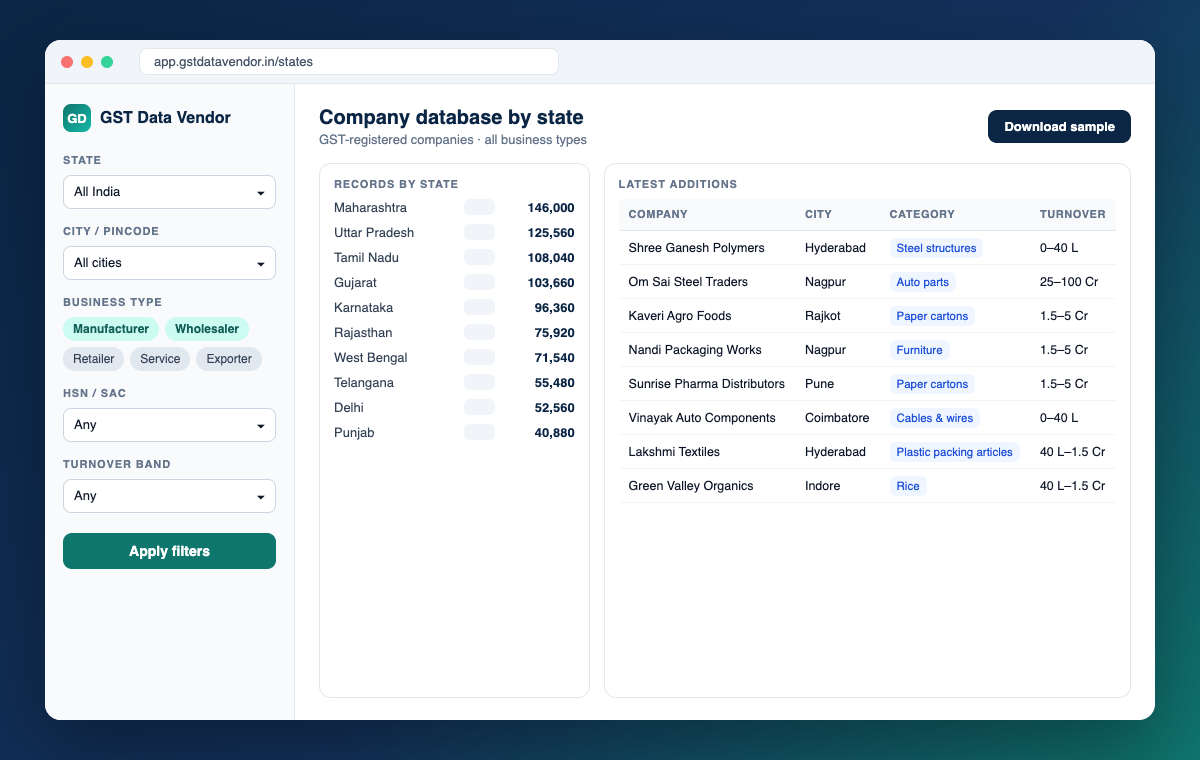
Why GST Data for Lead Generation Works
Most lead lists are old or vague. However, GST registration data is current and covers almost every active business in India, from small traders to large plants. It also tells you what each firm deals in, through HSN codes.
As a result, you can target by need instead of by guesswork. For example, a packaging supplier can list every food processor in two states within minutes.
Step 1: Define Your Ideal Customer
Start with your best existing customers. Then note what they have in common.
- Industry: what do they make or sell?
- Location: which states, cities or pincodes?
- Size: what turnover band fits your offer?
- Stage: are new businesses a good fit?
Step 2: Choose the Right Filters
Next, turn those answers into filters. Use HSN codes for industry, location filters for territory and turnover bands for size. Our HSN code data page lists common product groups.
If new businesses suit your offer, add new GST registration data. These firms are still choosing suppliers, so they respond well.
Step 3: Plan Outreach With GST Data for Lead Generation
Once you have the list, split it by territory. Then give each rep a clear set of accounts. In addition, sort each list by turnover band, so larger accounts get calls first.
| Team size | Suggested approach |
|---|---|
| 1–2 reps | One city, one industry, 300–500 records |
| 3–10 reps | One state, split by district |
| Field teams | Pincode lists for visit routes |
| Inside sales | Phone-first lists sorted by size |
Step 4: Track and Refine
Track calls, meetings and deals for each segment. After a few weeks, you will see which industries and cities convert best. Then order more of what works. Because the data refreshes monthly, you can top up your list with new firms each cycle.
Common Uses of GST Data for Lead Generation
- Distributors find new retailers in each district.
- Raw material suppliers find factories that use their inputs.
- Accountants reach new registrations for GST filing work.
- Lenders plan loan campaigns by turnover band.
- Software firms offer billing tools to new traders.
Get Started
You can check any GSTIN on your list using the official GST portal. When you are ready, ask for a free sample for your target market, and test the leads before you buy.